Training Courses
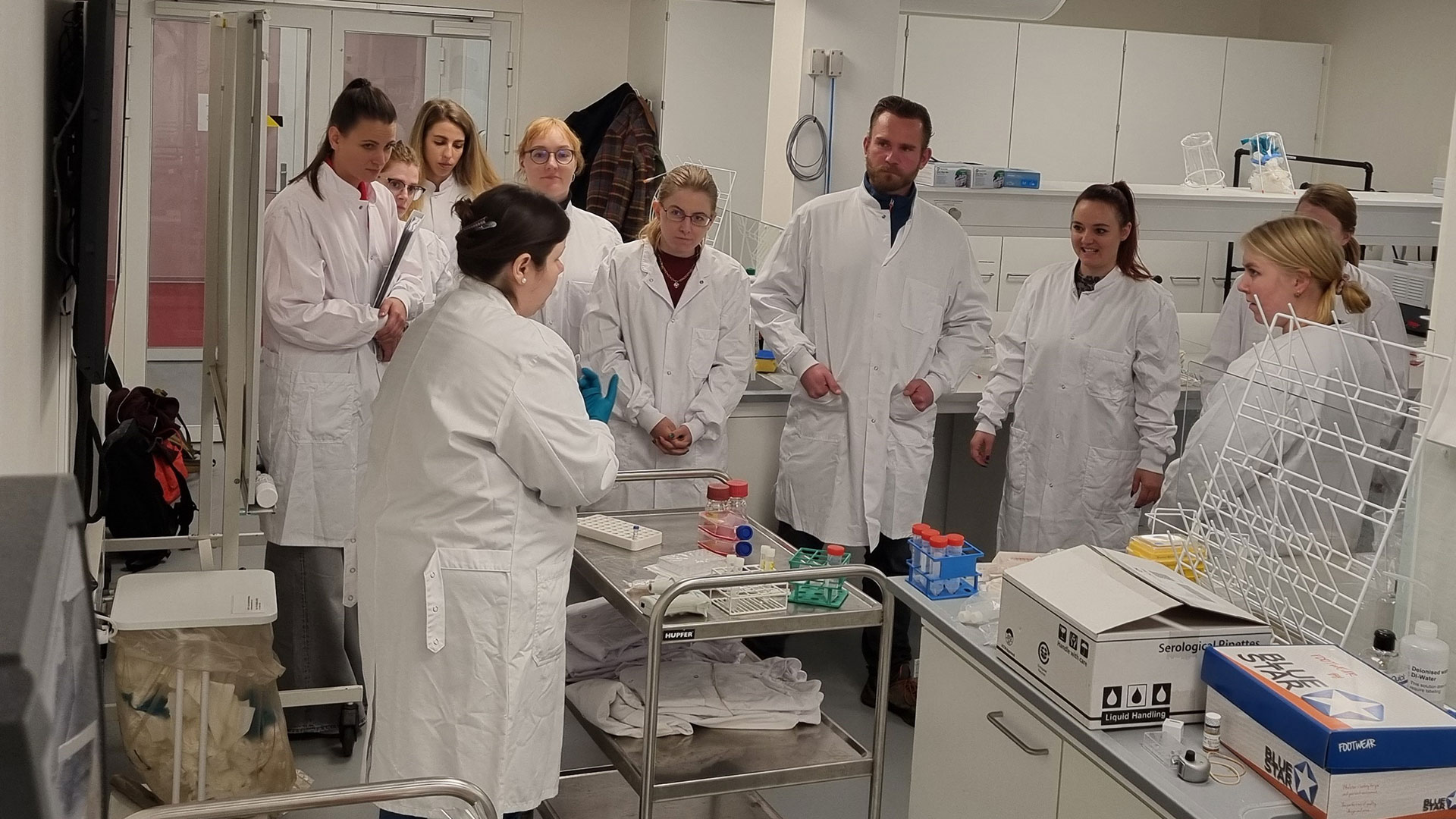
The EURL for Fish and Crustacean Diseases offers yearly training courses on relevant topics related to diagnostic techniques and surveillance for identification of listed fish and crustacean diseases.
Purpose
The purpose of the EURL's training course is to improve and harmonize diagnostic capabilities across Europe thereby increasing disease preparedness in the field of aquatic animal health.
Courses offered by the EURL
- A course focused on virology and diagnostics. This course content covers a wide range of tasks including sample collection, gross pathology, cell culture facility management, virus isolation, virus titration, mycoplasma testing and freeze-thawing cell lines for storing in liquid nitrogen, virus identification using biochemical and molecular methods (i.e. ELISA, IFAT, PCR, etc.).
- A course focused on other, more specific topics like biomolecular techniques, bioinformatics, pathology, or serology. The course includes relevant topics as PCR, Real-time PCR, sequencing, phylogeny, histopathology, immunohistochemistry, or in-situ hybridization.
The courses are primarily for staff from the National Reference Laboratories in EU and associated Member States.
Reports from previous courses
Here you will find reports from previous training courses.
- 2025: Methods for implementation of surveillance procedures
- 2024: Introduction to validation of diagnostic methods
- 2023: Methods for implementation of surveillance procedures
- 2022: Methods for implementation of surveillance procedures
- 2021: Introduction to histopathology
- 2021: Methods for implementation of surveillance procedures
- 2020: Methods for implementation of surveillance procedures